
Truck and equipment leasing
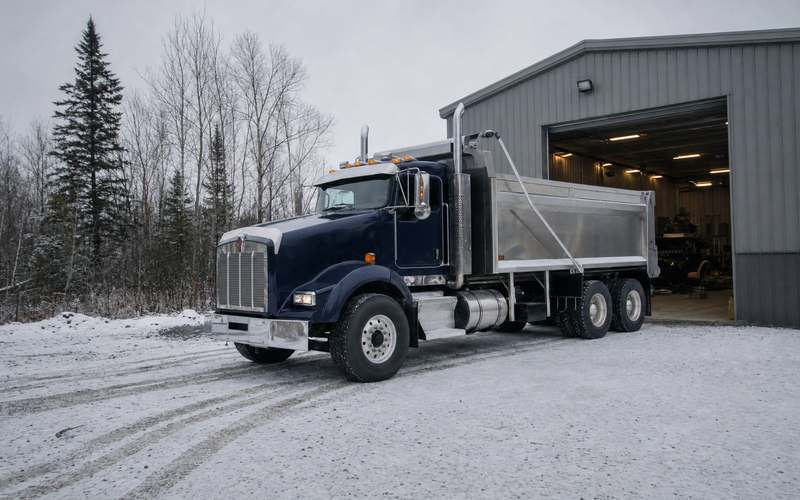
Your business uses the truck, trailer or machine from delivery, and becomes its owner by paying the buyout value agreed at signing.
At a glance
- During the term
- The lessor owns the equipment
- Sales taxes
- Spread over each payment
- At term end
- Buyout value agreed at signing
How leasing works
With a lease, the financing company buys the equipment you chose and owns it during the term. Your business uses it, makes monthly payments, and acquires it at the end through a buyout value set at signing.
Approval is often easier than with a traditional bank loan, and monthly payments are usually lower for the same equipment.
- 1.Application
- You tell us what equipment you want and its price.
- 2.Approval
- We present the file to lenders and come back with the conditions.
- 3.The term
- You use the equipment and make fixed monthly payments.
- 4.Buyout
- At the end, you pay the agreed buyout value and the equipment is yours.
Taxes, spread over the term
With a purchase, sales taxes are paid in full at delivery. With a lease, they are added to each payment, spread over the term.
Lease or term loan
With a loan, your business owns the equipment from day one and pays the sales taxes in full at delivery. With a lease, taxes are added to each payment.
Your accountant can tell you what best serves your tax situation.
| Purchase | Lease | |
|---|---|---|
| Taxes paid at delivery | $37,438 | $0 |
| Taxes on each payment | None | 14.975% of the payment |
| At the end of the term | Owner | Buyout value |
A business registered for GST and QST recovers these taxes either way. Leasing only changes when you pay them.
What the Civil Code of Québec provides
Leasing (crédit-bail) is governed by articles 1842 to 1850 of the Civil Code of Québec. It brings together three parties: the seller of the equipment, the financing company that buys it, called the lessor, and your business, the lessee, which uses it.
A few rules follow from it, and they show up in every contract.
What the law provides
- Use
- For business purposes only (art. 1842)
- Warranties
- The seller answers for them directly to your business (art. 1845)
- Risks
- Yours from the moment you take possession, hence the insurance (art. 1846)
- Publication
- The lessor's rights are registered at the RDPRM
Start your file
Enter the amount you have in mind and we will call you back to complete the file. Free and without commitment.
Or call (514) 648-8487
Free quote, several lenders compared.
Lease or loan: which should I choose?
With a lease, your business rents the equipment and can buy it at the end of the term through a buyout value. Payments are usually lower, and sales taxes are added to each payment. With a loan, you own the equipment from day one. The right choice depends on your tax situation and your goals: check it with your accountant.
Who owns the equipment during a lease?
The financing company, called the lessor: it buys the equipment your business chose from the seller, and its rights are registered at the RDPRM. Your business uses it for the whole term and becomes its owner by paying the buyout value set in the contract.
Operating lease or financial lease: what is the difference?
With an operating lease, the equipment goes back to the lessor at the end of the contract. With a financial lease, the financing company buys the equipment your business chose, and the contract usually sets a buyout value so you can own it at term end. The two are not treated the same way for accounting or tax purposes: check with your accountant.
How does the buyout value work?
The buyout value is the amount agreed at signing to acquire the equipment at the end of the contract. A higher buyout value lowers the monthly payments; a lower one raises them. We adjust this setting to your preference.
Are sales taxes paid at delivery?
With a lease, taxes are added to each payment instead of being paid in full at delivery. If your business is registered for GST and QST, you recover them either way; leasing only changes the timing, which frees up cash on equipment worth several hundred thousand dollars.
Are lease payments tax-deductible?
Generally, yes. With a lease, the lease payments are usually deductible as a business expense. With a financed purchase, it is rather the interest and the capital cost allowance on the equipment that are deducted. Depending on the contract terms, for example a purchase option at a very low price, the tax authorities may treat a lease as a purchase. Your accountant will confirm the treatment that applies to your contract.
Can a self-employed person lease equipment?
Yes, if the equipment is used for their business. The Civil Code of Québec reserves leasing (crédit-bail) for business purposes (art. 1842). An owner-operator, a sole proprietorship or a corporation can use it; property for personal use cannot be leased this way.
Who insures and maintains leased equipment?
Your business. From the moment it takes possession of the equipment, it bears the risk of loss (art. 1846 of the Civil Code), and the contract normally requires insurance that also protects the financing company. Maintenance is your responsibility unless agreed otherwise. Warranties from the seller or manufacturer are exercised directly by your business (art. 1845).
Does a lease reduce our borrowing capacity at the bank?
A lease is signed with a financing company, not with your bank, so your bank credit lines remain available for operations. Your bank still takes your commitments into account when assessing your debt, and your financial statements may have to report the contract depending on the accounting standards applied. Your accountant will confirm it.
Can a lease be ended before its term?
The contract sets this out. Some include a minimum term, others an early repayment penalty. We review these clauses with you before signing.
Caroline LavoiePresident, sales and financing
Let's talk about your lease
(514) 648-8487Monday to Friday, 8 a.m. to 5 p.m.
Apply now